










News
Search News
For almost three decades, CSBA has been a reliable source of independent, path-breaking research focused on the future of defense.
The heart of CSBA is our staff of uniquely qualified defense experts who conduct in-depth strategic and budgetary analyses.
The shift toward great power competition has reoriented national defense strategy around the prospect of large-scale conflict with peer adversaries. This transition has exposed a critical weakness in the American defense industrial base: it lacks the capacity to rapidly surge production at the scale and speed required for high-intensity war. This shortfall undermines the credibility of U.S. deterrence and risks leaving the Joint Force under-resourced in future large-scale conflicts. To mitigate this risk, the United States must develop industrial mobilization frameworks that enable scalable production in both peacetime and wartime.
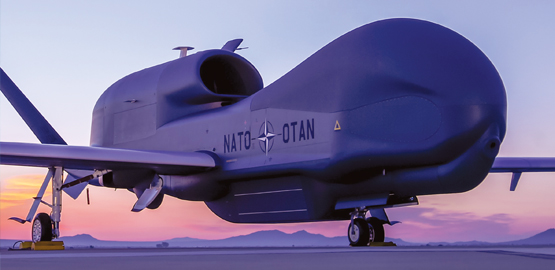
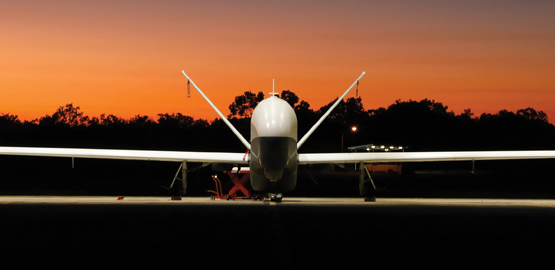
NATO is not as prepared as it could be to deter and defeat Russian aggression. Inadequate military surveillance is one major reason why. The Ukraine War has exposed gaps in the alliance’s ISR enterprise. Thankfully, the alliance already has a capability that can anchor the future surveillance network needed to contain Russia: NATO ISR Force (NISRF). The problem is that too few policymakers and experts know about it, so NISRF receives less recognition and investment than it deserves.
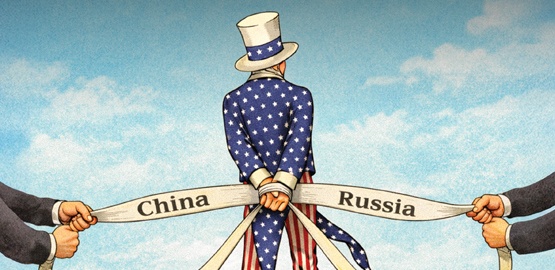
For years, the United States has tried to put China front and center, from the rebalance to more recent calls for prioritization. Yet it has never truly reconciled the limits of a one-major-war force with the reality of a multi-theater, multi-rival world—let alone a world in which U.S. rivals across different regions have growing incentives to support one another.
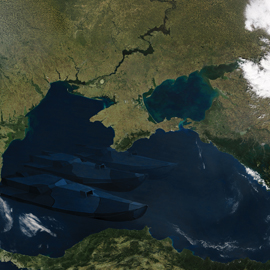
Ukraine stood on a strategic precipice in 2022. With its navy eliminated in the first weeks of Russia’s full-scale invasion, Ukraine was left with a shoreline vulnerable to amphibious assault and its vital maritime commerce exposed to interdiction by Russia’s Black Sea Fleet. Yet by mid-2023, Ukraine had forced the Russian navy into a defensive posture and resumed seaborne grain exports.
Military competition in and for space is rising. Both the People’s Republic of China (PRC) and the Russian Federation have put significant effort into developing, demonstrating, and fielding counterspace capabilities that could allow the Chinese and Russian militaries to threaten U.S. space systems. Is the United States prepared to compete with and deter two space rivals simultaneously?
The fiscal year 2026 Defense Department budget request, supplemented by reconciliation, would restore the upward drift in defense spending that has persisted for a decade as U.S.–China military competition has intensified. By following that pattern, the budget may appear to be on a well-grooved course. In actuality, it is an unstable equilibrium among contending ideas and factions within President Donald Trump’s governing coalition.