
The Center for Strategic and Budgetary Assessments (CSBA) traces its origins to the Defense Budget Project (DBP), which emerged in 1983 to conduct rigorous, independent analysis of U.S. defense spending. The DBP’s early work assessed the Reagan-era defense build-up as well as the political, institutional, and fiscal dynamics shaping U.S. military expenditures. As the Cold War ended and defense budgets began to contract, the DBP examined the challenges of aligning military commitments with reduced resources. This methodological rigor and independence would define CSBA as it evolved.
In 1995, Andrew Krepinevich reconstituted the DBP as CSBA. Under his leadership, the organization’s research agenda expanded beyond budget oversight to include defense strategy and future warfare concepts, while retaining an emphasis on fiscal realism. Drawing on a network of resident and nonresident fellows with experience across government, the military, academia, and the private sector, CSBA was well positioned to assess not only how the United States allocated defense resources, but also how those investments could translate into lasting competitive advantage.
This combination of budget analysis and strategic thinking was vital as the post-Cold War world began to take shape. With no near-term peer competitor and few clear benchmarks for anticipating future military effectiveness, imagining how the character of warfare would evolve became a central challenge.
Imagining Future Warfare
It was in this environment that CSBA became a leading center for work on the Revolution in Military Affairs (RMA) and related concepts. Drawing on close intellectual ties to the U.S. Department of Defense’s Office of Net Assessment (ONA) and the influence of the office’s founding director, Andrew W. Marshall, CSBA was one of a small group of organizations that began examining how advances in information technology, precision strike, and advanced sensing might drive fundamental operational and organizational changes in the U.S. military’s preparation for and conduct of future warfare.
This research originated within ONA during the early and mid-1990s, where teams of analysts explored how technologies might alter the character of warfare over the long-term. One of the earliest related lines of effort was exploring the hypothesis of a Military-Technical Revolution (MTR), a concept used to explain how specific technologies, such as precision guidance, stealth, and sensors, interacted with doctrine and organizations to alter military effectiveness. Early MTR studies included work by Andrew Krepinevich while he served in ONA. In the early 2000s, CSBA revised, synthesized, and published this body of work for a public audience. It would subsequently refine, augment, and adapt this work over the next two decades and beyond.
Concerns that the MTR concept overemphasized hardware over institutional change encouraged ONA and CSBA to focus on the broader framework of an RMA, a concept that helps to explain how cumulative technological advances, coupled with significant operational and organizational changes, could coalesce into a major qualitative shift in the conduct of warfare.
CSBA’s historically grounded work on the RMA emphasized this integration of technology, institutions, and concepts. Through its published work and engagement with defense planners, CSBA helped to institutionalize the RMA as a framework for thinking about future warfare and laid the groundwork for further analysis of precision strike, power projection, and great power competition.
Read More
The Military-Technical Revolution: A Preliminary Assessment (Krepinevich, 1992, published 2002)
The Revolution in War (Martinage, 2004)
Six Decades of Guided Munitions and Battle Networks: Progress and Prospects (Watts, 2007)
The Maturing Revolution in Military Affairs (Watts, 2011)
Anticipating the A2/AD Challenge
By the early to mid-2000s, several developments signaled that the conditions underpinning traditional U.S. power projection advantage were eroding. Potential U.S. competitors and adversaries had long been studying U.S. military operations, especially after Operation Desert Storm, and were investing heavily in capabilities designed to counter them.
China, in particular, was making large investments in capabilities designed to keep U.S. forces far from its territory and surrounding areas by denying them the ability to enter and operate. As the People’s Liberation Army (PLA) and others acquired ever more formidable capabilities, U.S. power projection forces were becoming increasingly vulnerable to emerging combinations of long-range precision strike and wide area sensing. These trends revealed a shift in the character of military competition that led CSBA to identify the challenge of contested access as a research priority and to examine how a future adversary might seek to offset U.S. advantage.
CSBA’s early studies of anti-access/area-denial (A2/AD) assessed how potential adversaries might combine long-range precision-guided munitions, integrated air and maritime defenses, and wide area sensing to hold U.S. forces at risk and restrict freedom of maneuver in contested regions. This work questioned core assumptions underlying longstanding U.S. force posture and operational concepts, including the presumed availability of secure forward basing, uncontested air superiority, and the ability to surge forces rapidly into theater. Geography posed a difficult problem, particularly in the Western Pacific, given few land bases, long sea and air lines of communication, and an adversary able to concentrate forces close to home while U.S. expeditionary forces, reinforcements, and supplies would require traversing long distances to reach vulnerable forward locations.
Seminar wargaming became a critical tool for assessing the implications of A2/AD for future military operations. CSBA conducted several series of wargames focused on highlighting growing U.S. vulnerabilities in the Pacific theater and elsewhere, and on countering adversary A2/AD operational approaches. These wargames examined a range of plausible operational challenges across different scenarios, using alternative force structures and postures, taskings, and assumptions. Over time, repeated engagement with hundreds of participants across the services and within the subject matter expert community were crucial for understanding and assessing the implications of the A2/AD challenge and developing potential operational responses.
When CSBA first advanced its work on A2/AD, China’s military modernization was visible but still nascent, and there was little consensus that it posed a significant operational challenge to U.S. forces. CSBA’s work prompted intense debate well before these challenges were widely recognized across the defense community.
Over time, U.S. competitors invested in ballistic and cruise missiles, advanced air defenses, counterspace capabilities, and integrated command and control networks, which made the operational challenges associated with contested access and freedom of maneuver increasingly observable. By the late 2000s and early 2010s, particularly in the Western Pacific, these developments prompted wider attention across the defense policy community and the A2/AD construct became a commonly used analytical framework for informing operational planning discussions.
Read More
Meeting the Anti-Access and Area-Denial Challenge (Krepinevich, Watts, Work, 2003)
Shaping the Debate: AirSea Battle
CSBA’s seminar wargames of the mid-2000s surfaced stark assessments of the vulnerability of U.S. forward bases, surface forces, and infrastructure in the Western Pacific. These insights were critical to the development of CSBA’s AirSea Battle concept in the late 2000s and shaped high-level discussions inside the Pentagon.
In 2009, Secretary of Defense Robert Gates directed the establishment of an Air-Sea Battle Concept Development Group (CDG), jointly led by the Navy and Air Force. Drawing upon a body of analysis generated in support of the CDG and conducted independently, CSBA developed its own AirSea Battle concept that integrated the air, sea, space, and cyber domains to offset the PLA’s rapidly improving A2/AD capabilities. The concept posited that operating effectively in a highly contested environment would require deeply integrated U.S. Air Force and Navy operations to withstand an initial attack by limiting damage to U.S. and allied forces and bases; execute a blinding campaign against adversary battle networks; execute a suppression campaign against PLA long-range ISR and strike systems; and seize and sustain the initiative across domains. The concept then laid out a second stage to create options to resolve a prolonged conventional conflict on favorable terms to the United States and its allies. This stage included conducting “distant blockade” operations, sustaining operational logistics, and ramping up industrial production.
CSBA’s work on AirSea Battle was intended as a point of departure to stimulate debate and encourage new thinking about a possible future. As the concept entered wider debate, it generated engagement across multiple audiences, particularly around escalation dynamics, signaling, and service roles. These ideas continued to influence subsequent Pentagon initiatives, wargaming, and CSBA’s own work on regional partnerships and operational concepts.
Read More
Why AirSea Battle? (Krepinevich, 2009-2010)
AirSea Battle: A Point of Departure Operational Concept (van Tol, Gunzinger, Krepinevich, Thomas, 2010)
From Defense Budget Constraints to Strategic Trade-Offs
The passage of the Budget Control Act in 2011 ushered in a period of fiscal constraint that forced the U.S. Department of Defense to confront trade-offs among readiness, modernization, and force structure. To make sense of this new environment, CSBA developed an innovative tool to clarify force planning realities.
Building on decades of independent defense budget and force structure analysis, CSBA created the Strategic Choices Tool (SCT) and conducted associated Strategic Choices Exercises for senior decisionmakers, operators, and researchers. Still a flagship CSBA program today, the SCT is a web-based platform that allows users to rebalance force structures, explore how different choices affect costs, and trace the effects of budgetary decisions on strategic options. Its primary value is the insight generated among exercise participants as they grapple with defense planning trade-offs.
As the defense budget stabilized and later grew in the mid-2010s, CSBA’s method for analyzing force structure trade-offs remained critical. The SCT evolved to offer more U.S. capabilities, both planned and notional, to explore future contingencies. The tool also expanded to include adversary capabilities, such as extensions that allow users to understand China and Russia’s defense spending and force structure choices.
These efforts continue to complement CSBA’s long-standing practice of conducting an annual, independent assessment of the U.S. president’s defense budget request. Through a detailed analysis of the proposed budget, CSBA evaluates the relationships between U.S. strategic objectives, operational demands, and long-term goals.
Read More
Strategic Choices: Navigating Austerity (Harrison, Gunzinger, 2012)
China’s Choices: A New Tool for Assessing the PLA’s Modernization (Bianchi, Creery, Schramm, Yoshihara, 2022)
Unstable Equilibrium: Analysis of the 2026 Defense Budget Request (Sharp, 2025)
From Defining the Problem to Shaping Action
By the mid-2010s, many of the strategic and operational challenges CSBA had surfaced in its first two decades had entered the mainstream of U.S. defense planning. China’s military modernization was no longer speculative, and Russia’s repeated use of force in Georgia, Syria, and Ukraine demonstrated its willingness to use force to revise the regional order. The 2014 Third Offset Strategy reflected the U.S. Department of Defense’s recognition of this environment and initiated a push to secure technological superiority over increasingly capable adversaries. Later, the 2018 National Defense Strategy explicitly identified long-term strategic competition with China and Russia as the central challenge that should shape U.S. defense planning. Problems that CSBA had placed on its research agenda years earlier had become the baseline assumptions underlying official strategy.
For CSBA, this shift marked a change in the nature of its task. Under Thomas G. Mahnken, who became CSBA’s president in 2016, the organization deepened the integration of its three core areas of work: defense strategy, operational concepts, and budget analysis. The question driving this work was no longer whether great power competition might emerge, but how to compete effectively in contested theaters, a landscape complicated by two nuclear peers, and with a defense budget that required trade-offs. Five interrelated areas have defined this era: operational design for contested theaters, questioning baseline assumptions in force design, deterrence in a proliferated nuclear environment, competition across both the Indo-Pacific and Europe, and a grounding of analysis in history.
Operational Design for Contested Theaters
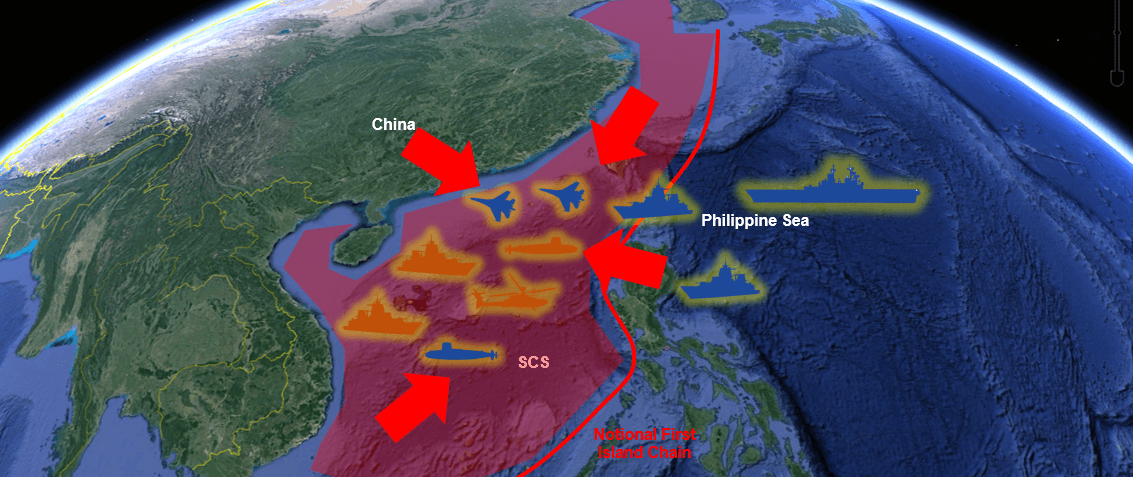
Building on earlier work on A2/AD and AirSea Battle, CSBA continued to develop new operational concepts for environments where U.S. access could no longer be assumed. One central line of inquiry examined the strategies, operations, and resource investments needed to counter Chinese aggression in the Western Pacific. CSBA proposed an “Inside-Out” operational concept that seeks to complicate adversary planning by imposing maritime pressure to erode Chinese leadership’s confidence in its ability to present the United States and its allies with a fait accompli. The concept entails fielding precision-strike networks along the First Island Chain, inside China’s A2/AD network, and supported by air and naval forces operating outside it. This concept influenced U.S. Marine Corps operational thinking, informed the curriculum of the Expeditionary Warfare School, and contributed to the 2019 Tentative Manual for Expeditionary Advanced Base Operations.
A parallel effort examined a related problem: how to deny China or Russia the ability to launch opportunistic acts of aggression against U.S. allies and partners along their periphery given increasingly capable Chinese and Russian reconnaissance-strike networks. CSBA’s “Deterrence by Detection” concept proposed using networks of unmanned aircraft systems and other ISR capabilities to maintain persistent situational awareness in key geographic areas. By maintaining real-time situational awareness, the concept aims to deter aggression and coercion below the threshold of conflict, and counter an adversary’s conventional fait accompli. Elements of this concept subsequently appeared in the U.S. Navy’s Stand-in-Forces concept, the 2022 Indo-Pacific Partnership for Maritime Domain Awareness (IPMDA) announced by the Quad, and the Chief of Naval Operations’ 2022 Navigation Plan, which explicitly recognized that persistent domain awareness imposes reputational costs on malign behavior.
Read More
Tightening the Chain: Implementing a Strategy of Maritime Pressure in the Western Pacific (Mahnken, Sharp, Fabian, Kouretsos, 2019)
Deterrence by Detection (Mahnken, Sharp, Kim, 2020)
Implementing Deterrence by Detection (Mahnken, Sharp, Bassler, Durkee, 2021)
Questioning Foundational Assumptions
Alongside its work on operational concepts for contested theaters, CSBA has consistently examined whether the assumptions underlying U.S. force design remain valid as strategic and technological conditions change.
One subject of this scrutiny was air-to-air combat, studied at a time when U.S airpower planning was emphasizing close-range combat even as advances in sensing, stealth, and missile technology were altering the environment. Drawing on a large historical dataset from decades of air-to-air engagements, CSBA assessed how advances in sensing, weapons, and communication technologies had changed air combat and what those changes meant for future combat aircraft designs and operational concepts. This effort posited a likely transformation of the nature of air combat: a reduction in the utility of speed and maneuverability, and an increase in the value of sensing, weapon payload, and range. It also identified significant implications for cost should the Air Force and Navy combine future fighter development with long-range strike programs.
A similar approach guided CSBA’s work on the strategic and operational consequences of the INF Treaty’s suspension. As constraints on theater-range missiles disappeared, CSBA assessed how reintroducing such systems could reclaim strategic options, regain military advantages, and strengthen the possibility of deterring great power conflict. This inquiry also evaluated the arguments against fielding such systems and estimated the costs of near- and mid-term options. A subsequent line of work illuminated a path for how intermediate-range systems might contribute collectively to a broader deterrence posture among the United States and its allies. CSBA examined how to integrate new systems around U.S. and allied missile capabilities, the geostrategic landscape, and asymmetries in platforms and geography, with an eye toward the Indo-Pacific in the near-term and Europe farther off.
Read More
Trends in Air-to-Air Combat: Implications for Future Air Superiority (Stillion, 2015)
Leveling the Playing Field: Reintroducing U.S. Theater-Range Missiles in a Post-INF World (Cohn, Walton, Lemon, Yoshihara, 2019)
Rings of Fire: A Conventional Missile Strategy for a Post-INF World (Edelman, Bassler, Yoshihara, Hacker, 2022)
Deterrence in a Proliferated Nuclear Environment
As competition with China intensified alongside rivalry with Russia, nuclear deterrence regained salience as a central strategic concern. CSBA’s work in this area addressed several interconnected areas that grew more pressing as the strategic environment evolved: whether the United States could implement significant reductions in its nuclear arsenal while still deterring rivals, dissuading competitors, and discouraging proliferation; whether its extended deterrence commitments remained adequate as great power competition returned and a second nuclear era emerged; whether current systems would meet future requirements; and how modernization decisions could affect the future U.S. deterrent.
Underlying these areas of study was a recognition that the nuclear environment was becoming more complex. A multi-year net assessment of the changing nuclear balance examined the past, present, and projected arsenals of declared nuclear weapons states, identified key asymmetries across national nuclear arsenals with potential consequences for competition and conflict, and traced how nuclear strategy and doctrine had evolved in the United States, Russia, and China.
CSBA’s insights informed Congressional deliberations and independent reviews of both the 2014 Quadrennial Defense Review and the 2018 National Defense Strategy, and continued to shape high-level discussion as concerns about a future multipolar nuclear environment grew.
Read More
The Future of America’s Strategic Nuclear Deterrent (Montgomery, 2013)
Extended Deterrence in the Second Nuclear Age (Montgomery, 2016)
Sustaining the Nuclear Deterrent (Gunzinger, Rehberg, Evans, 2018)
Assessing the Arsenals: Past, Present, and Future Capabilities (Cohn, Lemon, Montgomery, 2019)
Understanding Strategic Interaction in the Second Nuclear Age (Mahnken, Evans, Yoshihara, Edelman, Bianchi, 2019)
Competition Beyond the Indo-Pacific
CSBA’s focus on the Indo-Pacific has run in parallel with a substantial research program on Europe and Russia that predates Russia’s 2022 invasion of Ukraine by nearly a decade.
By the mid-2010s, CSBA was examining how the United States could prevent a single power from dominating Eurasia while managing risk across theaters and making difficult budgetary trade-offs. CSBA expanded its engagement with allied defense establishments in Europe, and, beginning in 2015, conducted a series of wargames that asked how eastern European militaries could adapt to a more threatening security environment. CSBA subsequently expanded its European engagement throughout the Baltics and Scandinavia, to include conducting Strategic Choices Exercises with allied defense establishments.
In the late 2010s, CSBA assessed the growing gap between Russian military investment and NATO allied capability; examined the options available to Washington to counter Russian pressure; and warned that the combination of European disunity, declining defense investment, and a reduced NATO military presence was running the risk of failing to deter Russian aggression. Another effort examined a less visible but equally significant dimension of the growing strength of authoritarian regimes. Russia and China’s political warfare campaigns were proving successful as tools to suppress dissent, manipulate public debate, discourage foreign narratives, and keep competitors distracted. CSBA characterized these campaigns as “comprehensive coercion,” and examined how democratic nations could limit their inherent vulnerabilities to these threats and adopt forward-leaning countermeasures.
Russia’s invasion of Ukraine in 2022 validated much of this work while raising new questions. CSBA examined how Russia’s demonstrated willingness to accept high costs was reshaping deterrence requirements along NATO’s eastern flank, particularly in the Baltic region. Drawing on historical patterns of Russian military adaptation, CSBA assessed that while Russia would remain a dangerous adversary, its postwar force was unlikely to differ fundamentally in character from the one that entered Ukraine in 2022. Institutional culture, industrial capacity, and constraints on manpower would impose limits on military transformation and persist across doctrinal shifts and leadership changes. At the same time, the war illuminated how innovation emerges under pressure. Ukraine’s maritime campaign in the Black Sea, where rapid fielding of unmanned systems prevented strategic failure against a conventionally superior navy, offered a concrete case study of how necessity and a willingness to improvise secured key gains and mitigated vulnerabilities, with direct implications for how the United States and its allies might employ unmanned systems in future conflicts.
Read More
Preserving the Balance: A U.S.-Eurasia Defense Strategy (Krepinevich, 2017)
U.S. Strategy for Maintaining a Europe Whole and Free (Edelman, McNamara, 2017)
Countering Comprehensive Coercion: Competitive Strategies Against Authoritarian Political Warfare (Mahnken, Babbage, Yoshihara, 2018).
Strengthening the Defense of NATO’s Eastern Frontier (Fabian, Gunzinger, van Tol, Cohn, Evans, 2019)
Deterrence and Defense in the Baltic Region (van Tol, Bassler, Dahlstrand, Hacker, 2022)
More of the Same? The Future of the Russian Military and Its Ability to Change (Dahlstrand, 2024)
A Navy of Necessity: Ukraine’s Unmanned Surface Vessels at War (Clare, 2025)
A Grounding in History
Across these lines of inquiry, CSBA has maintained a core commitment to informing defense analysis through history. This emphasis reflects both the organization’s long-standing connection to the net assessment tradition and the professional backgrounds of its leadership and staff, including historians of military strategy and practitioners of military operations. Thought the historical record does not bestow upon the analyst a predictive ability, it does provide a dataset of institutional experiences, strategic cultures, and patterns of behavior that can be examined and tested. Even when past trends do not extend linearly into the present, historical analysis can illuminate the range of possibilities, constraints, and behaviors that shape how the future could unfold.
This approach runs through much of CSBA’s work on U.S. competitors and potential adversaries. Understanding these actors is best accomplished by examining their historical experiences. Flagship regional studies include research into Chinese operational and institutional history and the strategic lessons the PLA has drawn from past conflicts. This approach also informs research that revisits earlier periods of U.S. military adaptation, including questions of industrial mobilization and production capacity, to assess how those dynamics might operate under contemporary and future conditions.
Read More
Chinese Lessons from the Pacific War: Implications for PLA Warfighting (Yoshihara, 2023)
Innovating for Great Power Competition: An Examination of Service and Joint Innovation Efforts (Mahnken, Montgomery, Hacker, 2023)
Arsenal of Democracy: Myth or Model? Lessons for 21st-Century Industrial Mobilization Planning (Hacker, 2025)
The U.S. Defense-Industrial Base: Past, Present, and Future (Watts, 2008)
Shaping the Next Strategic Debate
CSBA was founded to think ahead of and outside the mainstream: to surface problems before they became urgent and to conduct rigorous independent analysis. That work is critical precisely because it is undertaken before the problems it identifies demand an immediate response. In CSBA’s early years, that meant imagining how adversaries might challenge U.S. power projection before they were capable of doing so. As the organization evolved, it meant making the case the China’s military modernization posed a serious long-term challenge before that view was widely accepted. Throughout its history, CSBA’s analysis has shaped Congressional deliberations, informed strategy reviews, and influenced concept development across the U.S. Department of Defense and allied defense establishments. The problems CSBA identified are no longer hypothetical; they have become part of the foundation of U.S. defense strategy.
But new questions are already emerging: how deterrence functions in protracted conflict, how alliances shape military effectiveness under pressure, how escalation risks can be managed across multiple nuclear-armed adversaries, and how military advantage will be defined as the character of warfare and the U.S. role in the world change. CSBA has built a research program in which each new line of inquiry draws on the ones that preceded it, and its analysts have moved between CSBA and senior roles in government, industry, and academia, sustaining connections between independent analysis and decision-makers. That intellectual capital, and the independence and rigor that have characterized CSBA since its founding, are what position it to shape the next strategic debate as it has shaped the ones before it.

