

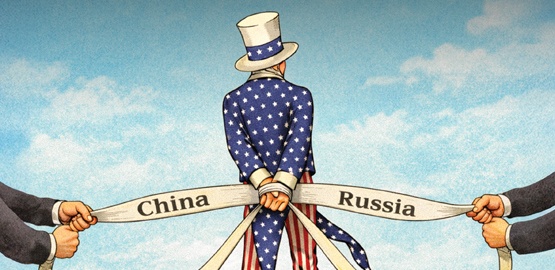
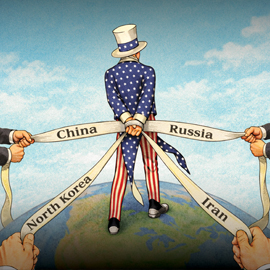







“The Trump team certainly has opened the aperture,” former Pentagon adviser Hal Brands, now at Johns Hopkins’ School of Advanced International Studies in the District, told The Washington Times in March
For almost three decades, CSBA has been a reliable source of independent, path-breaking research focused on the future of defense.
The heart of CSBA is our staff of uniquely qualified defense experts who conduct in-depth strategic and budgetary analyses.
“The Trump team certainly has opened the aperture,” former Pentagon adviser Hal Brands, now at Johns Hopkins’ School of Advanced International Studies in the District, told The Washington Times in March
CSBA is proud to announce a new cohort of fellows for the CSBA Congressional Defense Seminar Series. This seminar series is an in-depth bipartisan program for Congressional staff members. This evening series of topical seminars aim to provide staffers with the tools to master the conceptual foundations of defense policy as well as the intricacies of contemporary national security processes.
Xi Jinping wants China to have a “world-class military” by the middle of the century. While the country has undergone a historic military modernization effort in the last two decades, the People’s Liberation Army (PLA) remains a regional military power, albeit one with growing ambitions to achieve regional dominance and expand its ability to project power around the globe.
Is Xi’s dream of a world-class PLA realistic? His vision largely depends on PLA efforts to increase jointness and achieve intelligentization.
By all accounts, the Chinese military is on the march. The PLA’s annual budget grows at a rapid pace year after year. The PLA Navy is now larger than the U.S. Navy. “Carrier-killer” missiles attempt to threaten America’s ability to project power in the Indo-Pacific. The PLA’s increasingly sophisticated nuclear arsenal grows at an alarming pace. But these raw numbers alone do not capture some of the more subtle measures of warfighting capabilities, such as organization, training, education, and doctrinal concepts. These seldom noted yet critical measures of military power may tell a different story about the PLA’s pace of growth and ability to achieve its ambitions.
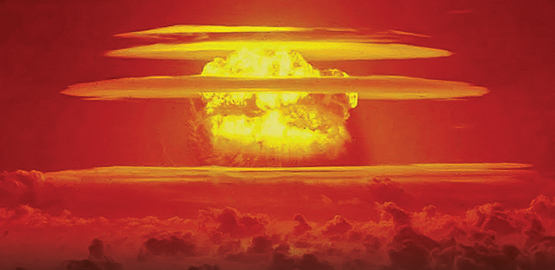
The Center for Strategic and Budgetary Assessments (CSBA), one of the nation’s premier centers for understanding competition and conflict, this week released Arms Control: Can Its Future Be Found in Its Past?, by CSBA Counselor Amb. Eric S. Edelman.
The Center for Strategic and Budgetary Assessments (CSBA) today announced the appointment of its newest non-resident senior fellows, adding to its team of world-class defense and security analysts.
There is growing pressure for the Biden administration to de-escalate tensions with China for the sake of climate cooperation. In a letter published on July 8, climate organizations called on the United States to work on “environmental, human rights, social, and governance standards” with China to avert a new Cold War.
Enticing China to act in support of the Biden administration’s effort to reduce global carbon dioxide emissions will not succeed. China’s significance as the world’s greatest emitter of pollution and Chinese policymakers’ own view of climate change negotiations will render any cooperative strategy ineffective. As our primary strategic rival, China will likely only respond to pressure on climate.
The Center for Strategic and Budgetary Assessments has published its most recent report, Mind the Power Gap: The American Energy Arsenal and Chinese Insecurity, by Christopher Bassler and Ben Noon. The authors assess the security implications of the United States' energy portfolio in relation to China's efforts to expand its own energy assets and position itself as a producer of clean energy. While the U.S. energy resource base is not without vulnerabilities--which the authors discuss, along with potential solutions--they argue that the Chinese Communist Party's efforts to build a secure, robust energy sector have been comparatively uneven, as it continues to rely upon imported fossil fuels and suffers from numerous related environmental and public health consequences.