

















BY CHAD WANEK
The shift toward great power competition has reoriented national defense strategy around the prospect of large-scale conflict with peer adversaries. This transition has exposed a critical weakness in the American defense industrial base: it lacks the capacity to rapidly surge production at the scale and speed required for high-intensity war. This shortfall undermines the credibility of U.S. deterrence and risks leaving the Joint Force under-resourced in future large-scale conflicts. To mitigate this risk, the United States must develop industrial mobilization frameworks that enable scalable production in both peacetime and wartime.
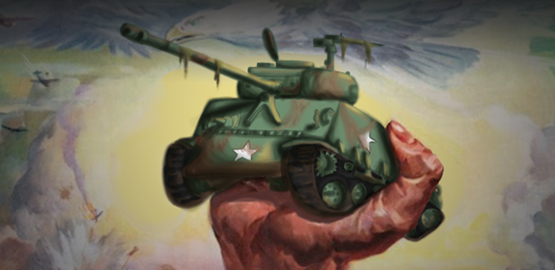
In Arsenal in Transition: Lessons from World War II Industrial Conversion, Captain Chad P. Wanek examines the U.S. automotive industry’s conversion to wartime production during World War II. Using tank manufacturing as a case study, the analysis shows how the United States overcame corporate-regulatory friction, mitigated infrastructure shortages, and adapted to continuous design changes while scaling production of complex systems.
By examining how industry repurposed commercial production capacity to meet wartime demand, Wanek identifies historical lessons for modern mobilization planners and evaluates the feasibility of establishing modern conversion programs to augment the defense industrial base. The report highlights several enduring insights, including the need to build defense production capacity during peacetime and the importance of balancing exquisite capabilities with the need for scalable mass production.
The report concludes by assessing the Civil Reserve Manufacturing Network as a mechanism to integrate commercial firms into a mobilization ready reserve. This approach offers a more cost-effective means of generating surge capacity than building new infrastructure and could enable the United States to meet the sudden demands of large-scale conflict.