





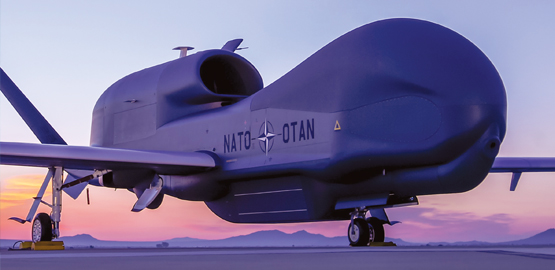















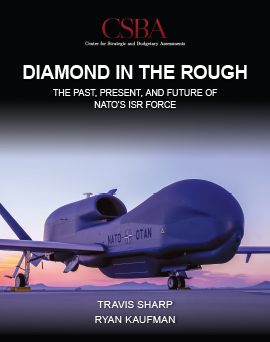
NATO is not as prepared as it could be to deter and defeat Russian aggression. Inadequate military surveillance is one major reason why. The Ukraine War has exposed gaps in the alliance’s ISR enterprise. Thankfully, the alliance already has a capability that can anchor the future surveillance network needed to contain Russia: NATO ISR Force (NISRF). The problem is that too few policymakers and experts know about it, so NISRF receives less recognition and investment than it deserves.
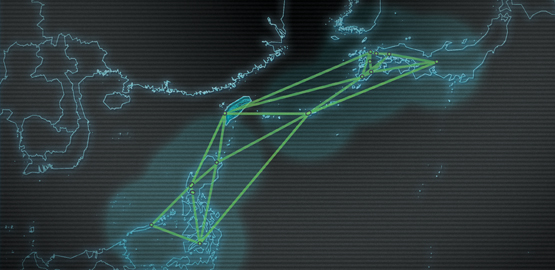
In Diamond in the Rough, CSBA authors Travis Sharp and Ryan Kaufman analyze NISRF’s historical development, current limitations, and future requirements. They argue that, in peacetime, the force should perform Deterrence by Detection by maintaining persistent presence in five priority geographic areas. In wartime, the force should support forward defense by conducting dynamic targeting near the forward edge of the battle area.
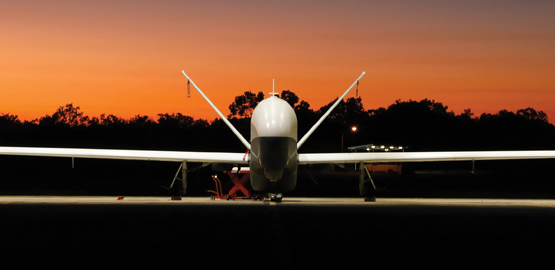
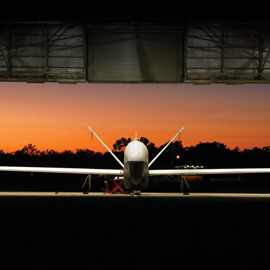
To fulfill these requirements, NISRF needs more locations and capabilities. NATO should establish additional operating sites in Finland, Poland, Greece, and Norway. It also should buy five MQ-4Cs and five MQ-9Bs, so NISRF owns 15 total aircraft. These investments would enable NISRF to play a larger role in high-profile missions essential to European security. NATO should make these investments in 2026 to keep pace with the Russian threat.