

Publications
"Nobody does defense policy better than CSBA. Their work on strategic and budgetary topics manages to combine first-rate quality and in-depth research with timeliness and accessibility—which is why so many professionals consider their products indispensable." – Gideon Rose, Editor of Foreign Affairs, 2010-2021
Search Publications
Studies
The Three-Body Problem: Nuclear Command, Control, and Communications
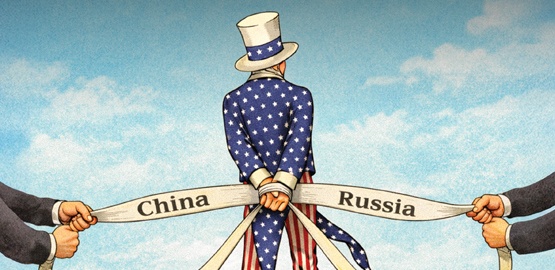
The United States is facing a novel and even more challenging version of the problems that past cohorts of policymakers confronted during the Cold War. The United States must now simultaneously deter two nuclear peers –something it has never done. China and Russia are developing and deploying capabilities that could threaten the U.S. nuclear system. The potential that they might take joint, concerted action further complicates the calculus of deterrence. As a result, U.S. government officials are facing an issue that last bedeviled their predecessors some 40 years ago –the prospect of nuclear decapitation.
Studies
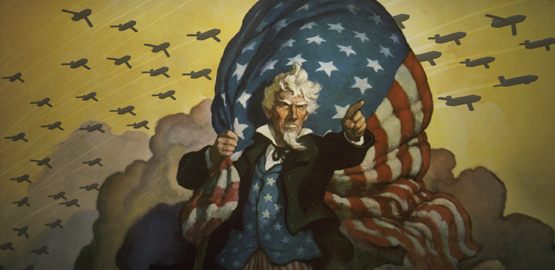
Arsenal in Transition: Lessons from World War II Industrial Conversion
The shift toward great power competition has reoriented national defense strategy around the prospect of large-scale conflict with peer adversaries. This transition has exposed a critical weakness in the American defense industrial base: it lacks the capacity to rapidly surge production at the scale and speed required for high-intensity war. This shortfall undermines the credibility of U.S. deterrence and risks leaving the Joint Force under-resourced in future large-scale conflicts. To mitigate this risk, the United States must develop industrial mobilization frameworks that enable scalable production in both peacetime and wartime.
Studies
Breaking the Double Bind: U.S. Defense Strategy and Multi-Theater Deterrence
For years, the United States has tried to put China front and center, from the rebalance to more recent calls for prioritization. Yet it has never truly reconciled the limits of a one-major-war force with the reality of a multi-theater, multi-rival world—let alone a world in which U.S. rivals across different regions have growing incentives to support one another.
Studies
Securing Space Superiority: U.S. Deterrence Options in a Two-Rival Threat Environment
Military competition in and for space is rising. Both the People’s Republic of China (PRC) and the Russian Federation have put significant effort into developing, demonstrating, and fielding counterspace capabilities that could allow the Chinese and Russian militaries to threaten U.S. space systems. Is the United States prepared to compete with and deter two space rivals simultaneously?
Studies
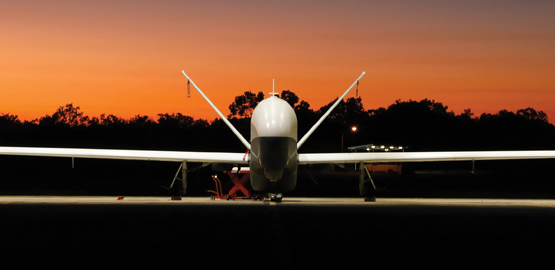
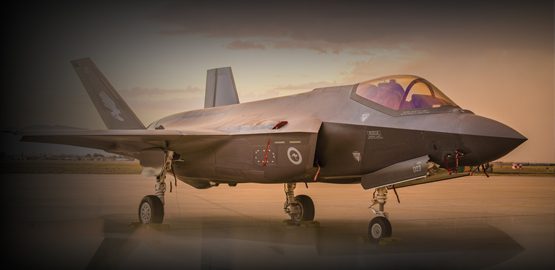
Indo-Pacific Stronghold: Northern Australia’s Role in the Australia-U.S. Alliance
Over the past decade, Australia’s strategic situation has gotten worse due to Beijing’s expanding ambitions and the growth of Chinese military power to back them up.
In Indo-Pacific Stronghold: Northern Australia’s Role in the Australia-U.S. Alliance, CSBA’s President and CEO, Thomas G. Mahnken, argues that Australia is located in a geographic sweet spot. It is far enough from China to avoid having to face the volume of missile fires that confront Taiwan and Japan while being close enough to the scene of potential conflicts, such as Taiwan and the South China Sea, to be operationally relevant.
Testimonies
Testimony Before Select Committee of the U.S. House of Representatives on The Chinese Communist Party
On June 25, 2025, CSBA President and CEO, Dr. Thomas Mahnken, testified before the Select Committee of the U.S. House of Representatives to discuss the ongoing competition between the United States and the People's Republic of China in the field of artificial intelligence.